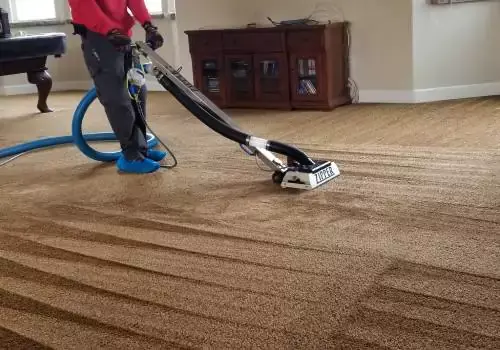
A November nor’easter rolls across Long Island. Rain comes sideways for hours, storm drains fill with leaves, and the power blinks out. By morning the sump pump has stopped and there is water on the basement carpet in your Freeport split-level or your Massapequa cape. What you do in the first few hours decides if that carpet can be saved. This guide walks you through it step by step: safety first, what to do yourself, what NOT to do, and when to call for emergency water extraction.

Why Long Island basements flood in the fall and winter
Most of the flooded basements we see on Long Island come from the same few causes. Knowing yours helps you fix the problem and keeps it from happening again.
- Nor’easters and heavy rain. Long storms drop a lot of rain in a short time. Window wells fill up and water pours in around the frames.
- A high water table. Many South Shore neighborhoods sit close to the bays and canals. After days of rain, groundwater pushes up through the slab and seeps in where the floor meets the wall.
- Tidal and street flooding. In parts of Oceanside, Freeport, Long Beach and Babylon, a storm surge or a very high tide can send water into the street and into low homes.
- Sump pump failure. A storm that knocks out power also stops a pump with no battery backup. The pump can also clog, burn out or get stuck.
- Clogged gutters and leaders. Fall leaves block gutters, so roof water spills next to the foundation instead of away from it.
- Burst or leaking pipes. The first hard freeze can split a pipe on an outside wall or in a crawl space.
Step 1: Stay safe before you step in
Water and electricity do not mix. If water is near outlets, a power strip, a space heater or the electric panel, do not walk into it. Turn off power to the basement at the panel only if you can reach the panel while standing on a dry floor. If you cannot, call your electric company or an electrician first.
Also think about where the water came from. Water from a sewer backup or from the street can carry bacteria and chemicals. Wear rubber boots and gloves, keep kids and pets upstairs, and do not try to clean it up yourself.
Step 2: Know what kind of water you have
The source of the water matters more than how deep it is. It tells you if the carpet can be saved and how careful you need to be.
| Water source | Type | Can the carpet be saved? | What to do |
|---|---|---|---|
| Burst supply pipe, water heater leak, rain through a window well | Clean water | Often yes, if the water is removed fast | Stop the water, extract it and dry the room quickly |
| Groundwater seeping through the floor, washing machine overflow | Gray water (some contamination) | Sometimes. The pad usually has to be replaced | Extract, clean and sanitize. Do not wait |
| Sewer or drain backup, flood water from the street, bay or canal | Black water (heavy contamination) | Usually no. Carpet and pad should be removed | Do not touch it. Call a pro right away |
Clean water does not stay clean for long. After it sits on a carpet and picks up dirt from the floor, it starts to act like gray water. That is why speed is everything.
Step 3: What you can do right now
Stop the water
If a pipe burst, shut off the main water valve. In most Long Island homes it sits in the basement or near the water meter. If the sump pump stopped, check the power and the float switch. A portable pump or a shop vac can buy you time until the pump runs again.
Document everything
Take photos and short videos of the water, the wet carpet, the walls and anything that got damaged. Do it before you move things. Your insurance company will want to see it, and it is hard to show later.
Move things off the carpet
Lift furniture, boxes and electronics off the wet floor. Put foil or small wood blocks under furniture legs that cannot be moved, so stains from wood and metal do not spread into the carpet. Roll up wet area rugs and take them to a dry room or garage. A wool or Oriental rug that sits in water can bleed color, so get it out first.
Start airflow
Open windows if the air outside is drier than the basement. Run fans and a dehumidifier. Close the basement door so the damp air does not travel up into the rest of the house. With strong airflow and proper extraction, a lightly wet carpet usually dries within a few hours. Real soaking needs commercial equipment.
Tip: Pull up one corner of the carpet with pliers and look at the pad underneath. If the pad is soaked, a home fan will not dry it. Water trapped in the pad is what leads to mold, a musty smell and a ruined subfloor.
What NOT to do
- Do not use a regular household vacuum. It is not made for water and can give you a shock.
- Do not wait for the carpet to “air dry” on its own. A basement has little airflow. The carpet may feel dry on top while the pad stays wet for days.
- Do not turn the heat way up. Heat without airflow and dehumidifying just makes the basement warm and damp, which is what mold likes.
- Do not walk on a wet carpet more than you have to. Wet backing is weak. Foot traffic can stretch the carpet and cause ripples and separation.
- Do not try to clean sewer water yourself. Bleach on carpet does not make black water safe, and it can damage the carpet.
- Do not rent a carpet cleaning machine for flood water. Rental machines are made to clean, not to pull out large amounts of water. They leave the pad wet.
When to call a pro (and what to expect)
Call for professional help if the water covers more than a small spot, if it came from outside or from a drain, if the pad is soaked, or if you smell a musty odor even after the surface looks dry. Our 24/7 emergency water extraction on Long Island is built for exactly this. We are open 24 hours a day, 7 days a week, including holidays, so a storm at 2 a.m. on a Sunday is not a problem. Call (516) 894-2919 and tell us what happened.
Here is what a visit looks like:
- Inspection. Our certified technicians find the water source, check how far the water spread under the carpet and into the pad, and tell you honestly if the carpet can be saved.
- Water extraction. We use powerful extraction equipment to pull standing water out of the carpet and pad. This is the most important step. The more water we take out, the faster everything dries.
- Pad and carpet decisions. If the pad is soaked with gray or black water, it has to go. In many clean water cases the carpet itself can be lifted, dried and laid back down.
- Drying. We set up air movers and dehumidifiers and show you how to keep them running. Most rooms usually dry within a few hours with good airflow, but a deeply soaked basement can take longer.
- Cleaning and sanitizing. Once the water is out, we clean the carpet with hot-water extraction (steam cleaning) and Green Choice products that are safe for kids and pets.
We will tell you the truth about results. Carpet hit by clean water and handled fast often comes back looking good. Carpet that sat in sewer water or street flood water should not stay in your home, and we will not pretend otherwise. If an old water stain or spot comes back after we clean, our 100% satisfaction guarantee means we come back and re-clean it for free.
Once the water emergency is over, many homeowners book a full carpet cleaning on Long Island for the rest of the house, since muddy boots tend to track the mess upstairs. Right now 2 rooms are $99, or the first room only is $49 (a minimum service charge applies). You save $20 when you book online, and same-day service is often available. To get a sense of pricing for larger jobs, see our guide on what carpet cleaning costs on Long Island. If wet area rugs were part of the damage, our free rug pickup and delivery brings them to our own rug cleaning facility, and our winter rug care guide explains how to protect them the rest of the season. For a rug that got soaked, our guide to water-damaged rug cleaning on Long Island shows which wet rugs can be saved and what to do first.
Flooded basements across Nassau and Suffolk
We have handled water calls all over Long Island since 2005. On the South Shore, homes near the canals in Freeport and Oceanside deal with tidal flooding and high groundwater during big storms. Out in Suffolk, older homes near the Great South Bay in Babylon often have finished basements with wall-to-wall carpet that soaks up water fast. Wherever you live, from Nassau County out to the East End, we can usually get to you quickly when water is on the floor.
How to keep it from happening again
- Clean gutters after the leaves fall and make sure leaders send water away from the house.
- Test your sump pump before storm season by pouring a bucket of water into the pit.
- Add a battery backup to the sump pump, since nor’easters often knock out power.
- Put clear covers on window wells.
- Protect pipes in garages and crawl spaces before the first freeze. If one splits, our guide to a burst pipe and wet carpet shows what to do in the first hour.
- Think about tile or a waterproof floor in a basement that floods often. If you keep carpet, use a moisture-resistant pad.
- Run a dehumidifier all year. If the basement carpet still smells damp weeks later, our guide to a musty carpet smell shows how to find the hidden moisture.
Frequently asked questions
Can a carpet be saved after a basement flood?
Often yes, if the water was clean, like from a burst pipe or rain through a window well, and it is removed fast. Carpet that sat in sewer water or flood water from the street usually has to be removed for health reasons.
Does the carpet pad need to be replaced after water damage?
In most cases where the pad got soaked with gray or black water, yes. The pad acts like a sponge and is very hard to clean. With clean water that is removed quickly, the pad can sometimes be dried and kept.
How fast should water be removed from a wet carpet?
As soon as possible. The longer water sits, the more it soaks into the pad and subfloor and the higher the chance of mold and odor. Call for water extraction the same day you find the water.
Can a shop vac dry a flooded carpet?
A shop vac can pick up some surface water and buy you time, but it cannot pull water out of the pad. A soaked carpet needs professional extraction equipment plus air movers and a dehumidifier to dry fully.
Do you offer emergency water extraction at night and on holidays?
Yes. We are open 24 hours a day, 7 days a week, including holidays, and we offer emergency water extraction across Nassau and Suffolk County.
We are open 24 hours, 7 days a week across Nassau & Suffolk. Certified technicians, kid & pet safe products and a 100% satisfaction guarantee. Right now: 2 rooms $99 or first room $49*. Book online and save $20.
*Minimum service charge applies.
