
Winter is hard on area rugs. On Long Island, the months from November to March bring rain, wet snow, rock salt on every driveway and sidewalk, and dry indoor heat that runs day and night. A wool or Oriental rug in the front hall or living room takes all of it. The good news is that a few simple habits protect your rug for the whole season. This guide explains what winter does to rugs, how to care for them at home, what NOT to do, and when it is time for a professional rug cleaning.
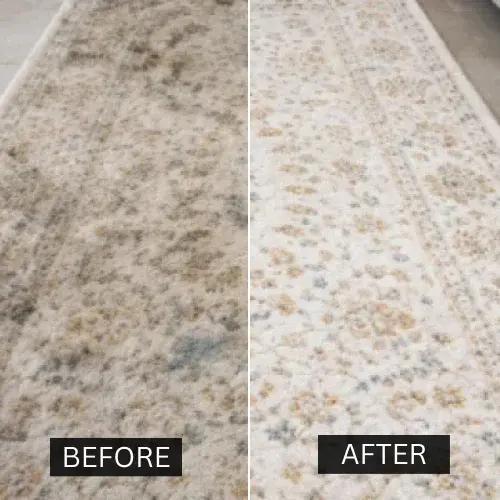
What winter does to area rugs on Long Island
Most rug damage in winter is slow. You do not see it in one day, but by spring the rug looks dull, feels stiff, or has a white haze near the door. Here is what is going on:
- Rock salt and ice melt. Towns and homeowners from Valley Stream to Riverhead spread salt after every storm. It sticks to boots and gets walked inside. Salt crystals are sharp and act like sandpaper on fibers. They also pull moisture from the air, so salty spots can stay damp and leave white rings when they dry.
- Wet slush. Melting snow carries road dirt, sand and oil into the pile. When a rug stays wet at the edge of a doorway, the backing can weaken and natural dyes in wool rugs can start to bleed.
- Dry indoor heat. Forced-air heat and radiators make the air very dry. Wool and silk fibers can become brittle, and the fringe on hand-knotted rugs can dry out and break more easily.
- More time indoors. Kids, pets and holiday guests are inside more often. More feet mean more grit ground into the base of the rug, where the vacuum does not reach.
- Grit you cannot see. Fine sand from beaches and winter roads sinks deep into the knots. Every step grinds it against the fibers, which wears down the pile over time.
Know your rug before you clean it
Different rugs need different care. Before you treat a spot or wash anything, check the label on the back or ask the store where you bought it. If there is no label, look at the back: a hand-knotted rug shows the same pattern on the back as the front, while a machine-made rug often has a stiff or glued backing.
| Rug type | Winter risk | Home care | Professional care |
|---|---|---|---|
| Wool (hand-knotted or tufted) | Salt, dye bleeding when wet, dry fringe | Vacuum often, blot spills with cool water only | Gentle wash with dye-safe products, controlled drying |
| Oriental and Persian | Color run, fringe damage, grit in the knots | Vacuum with beater bar off, rotate twice a year | Full wash at a rug facility, fringe cleaning |
| Silk and silk blends | Water spots, brittle fibers in dry heat | Keep out of entryways, dry blot only | Specialist cleaning only |
| Viscose (art silk) | Yellowing, matting and stiff patches when wet | Dry blot only, never rub | Specialist cleaning only |
| Synthetic (nylon, polyester) | Salt residue, ground-in dirt | Vacuum, mild spot cleaning | Hot-water extraction or full wash |
| Jute and sisal | Water stains and shrinking | Keep dry, vacuum, dry blot | Low-moisture specialist cleaning |
If you are not sure what you have, treat it like a fine wool rug until you know more. Gentle care never hurts a rug. Harsh care can ruin one. If your rug may be viscose or art silk, read our guide to viscose rug cleaning and care before you treat any spot.
Winter rug care at home: a simple routine
1. Stop salt at the door
The cheapest rug protection is a good doormat outside and a washable mat inside every door. Ask family and guests to take off boots in the entry. A boot tray by the door keeps slush off the floor. If your nicest rug sits in the front hall, think about moving it to a quieter room until spring and using a washable runner instead. Salt that gets past the mat often lands on the tile around the rug first, and our guide to cleaning winter salt off tile and grout shows how to keep foyer and mudroom floors clean.
2. Vacuum more often
In winter, vacuum high-traffic rugs two or three times a week. Use suction only or turn off the spinning beater bar on wool, Oriental and silk rugs, because the bar can pull and fray fibers. Vacuum in the direction of the pile. Once a month, flip smaller rugs over and vacuum the back. This shakes loose the grit trapped deep in the knots. Never run the vacuum over the fringe; it can catch and tear.
3. Treat salt marks the right way
Let wet salt spots dry first, then vacuum up the loose crystals. For a white haze that stays, mix equal parts white vinegar and cool water. Test it on a hidden corner first. Dampen a white cloth, blot the spot, then blot with plain cool water and press with a dry towel. Do not pour liquid onto the rug. If the white ring comes back, or if the rug is silk or viscose, leave it for a professional.
Tip: If a rug gets soaked by melting snow, lift the wet end off the floor right away and prop it on a chair or a clean bucket so air can move under it. A fan pointed at the wet area helps a lot. Never leave a wet rug lying flat on a wood floor — trapped moisture can stain both the rug and the floor.
If a storm or a burst pipe put water on your basement carpet too, our guide on what to do with a flooded basement carpet walks you through the first steps.
4. Rotate and protect from dry heat
Turn your rugs end to end every few months so traffic and sunlight wear them evenly. Keep rugs away from radiators, baseboard heaters and fireplaces. A humidifier in a room with fine wool or silk rugs helps the fibers stay soft and less brittle through the heating season.
What NOT to do
- Don’t use hot water or steam at home on wool, silk or Oriental rugs. It can set stains, shrink the rug and make dyes run.
- Don’t rent a carpet machine for a fine rug. Rental machines leave too much water and soap behind. The rug can stay wet for a long time, smell musty and bleed color.
- Don’t rub or scrub spots. Rubbing untwists the fibers and leaves a fuzzy, faded patch. Always blot.
- Don’t use bleach, oxygen boosters or carpet sprays on natural fibers. They can strip color from wool and silk for good.
- Don’t store a rug in plastic. If you put a rug away for the winter, plastic traps moisture and can cause mildew. Roll it (never fold it) with the pile facing out, wrap it in breathable cloth or paper, and store it in a dry place. Stored wool rugs are also a favorite target for moths, so see our guide to spotting and stopping rug moths before you put one away.
When to call a pro (and what to expect)
Home care keeps a rug looking good between cleanings, but it does not remove the deep grit, salt and oils that build up over months. Most area rugs in busy Long Island homes need a professional cleaning about once a year. Rugs in entryways, homes with pets or homes with young kids often need it more often. Call a professional when:
- The rug looks dull or gray even after vacuuming
- White salt rings keep coming back near the door
- You see color bleeding, a musty smell or a stiff patch after a spill
- The rug is wool, silk, viscose or a valuable Oriental or Persian piece
- Pets have had accidents on it
Here is what to expect with our rug cleaning service on Long Island:
- Free pickup and delivery. We roll up your rug at your home and bring it to our own rug cleaning facility. You do not need to load anything into your car in the snow.
- Inspection first. Our certified technicians check the fiber, the dyes, the fringe and any damage, and test the colors before washing. We tell you what we see and confirm the price before any work begins.
- Deep dust removal. Fine rugs hold a lot of hidden grit and salt. We remove it before washing so it does not turn into mud in the pile.
- The right wash for the fiber. Wool and Oriental rugs get a gentle wash with dye-safe Green Choice products that are safe for kids and pets. Synthetic rugs can take a stronger cleaning.
- Controlled drying. Rugs are dried fully at our facility, not left damp on your floor, then groomed and returned ready to use.
We are honest about results. Most winter dirt, salt and everyday spills come out completely. Old pet stains or dye that has already run may lighten a lot but not fully disappear, and we will tell you that up front. With our 100% satisfaction guarantee, if a spot comes back, we come back and re-clean it for free.
Many homeowners book their rug cleaning together with the rest of the house. If your wall-to-wall carpet also took a beating from holiday guests, see our carpet cleaning on Long Island — right now 2 rooms are $99, or the first room only is $49 (a minimum service charge applies). Wool sofas and chairs near the fireplace collect the same winter dust, so our upholstery cleaning on Long Island is a good match, too. You save $20 when you book online, and same-day service is often available. If a spill already happened, our guide on removing Thanksgiving carpet stains walks you through first aid step by step.
Rug care across Nassau and Suffolk
We pick up and deliver rugs all over Long Island. On the North Shore, many older homes in Huntington and Northport have hand-knotted Oriental and Persian rugs that need gentle care after a winter of muddy boots. On the South Shore, families in Massapequa deal with beach sand in summer and salt in winter — both are tough on rug fibers. Wherever you live in Nassau or Suffolk County, we are open 24 hours a day, 7 days a week, including holidays.
Frequently asked questions
How do you get rock salt out of an area rug?
Let the spot dry, then vacuum up the loose salt. Blot the white haze with a cloth dampened in equal parts white vinegar and cool water, then blot with plain water and press dry with a towel. Test on a hidden corner first, and call a professional for wool, silk or viscose rugs.
How often should area rugs be professionally cleaned?
Most area rugs in Long Island homes need a professional cleaning about once a year. Rugs in entryways, busy family rooms, or homes with pets and young kids often need it more often.
Can you clean an Oriental rug with a rental carpet machine?
We do not recommend it. Rental machines leave too much water and soap in the rug, which can cause color bleeding, a musty smell and a stiff feel. Hand-knotted Oriental and Persian rugs need a gentle wash and controlled drying.
Should you put a good rug away for the winter?
If your rug sits in a busy entryway, moving it to a quieter room for the winter is a smart idea. If you store it, have it cleaned first, roll it with the pile facing out, wrap it in breathable cloth or paper, and keep it in a dry place. Never store a rug in plastic.
Do you pick up rugs in the winter?
Yes. We offer free rug pickup and delivery all year across Nassau and Suffolk County. We clean rugs at our own rug cleaning facility and return them fully dry and ready to use.
We are open 24 hours, 7 days a week across Nassau & Suffolk. Certified technicians, kid & pet safe products and a 100% satisfaction guarantee. Right now: 2 rooms $99 or first room $49*. Book online and save $20.
*Minimum service charge applies.

